08:06
July 22, 2026
President of University Emphasizes the Need to Redefine University–Industry Collaboration Models in Partnership with SADRA
.
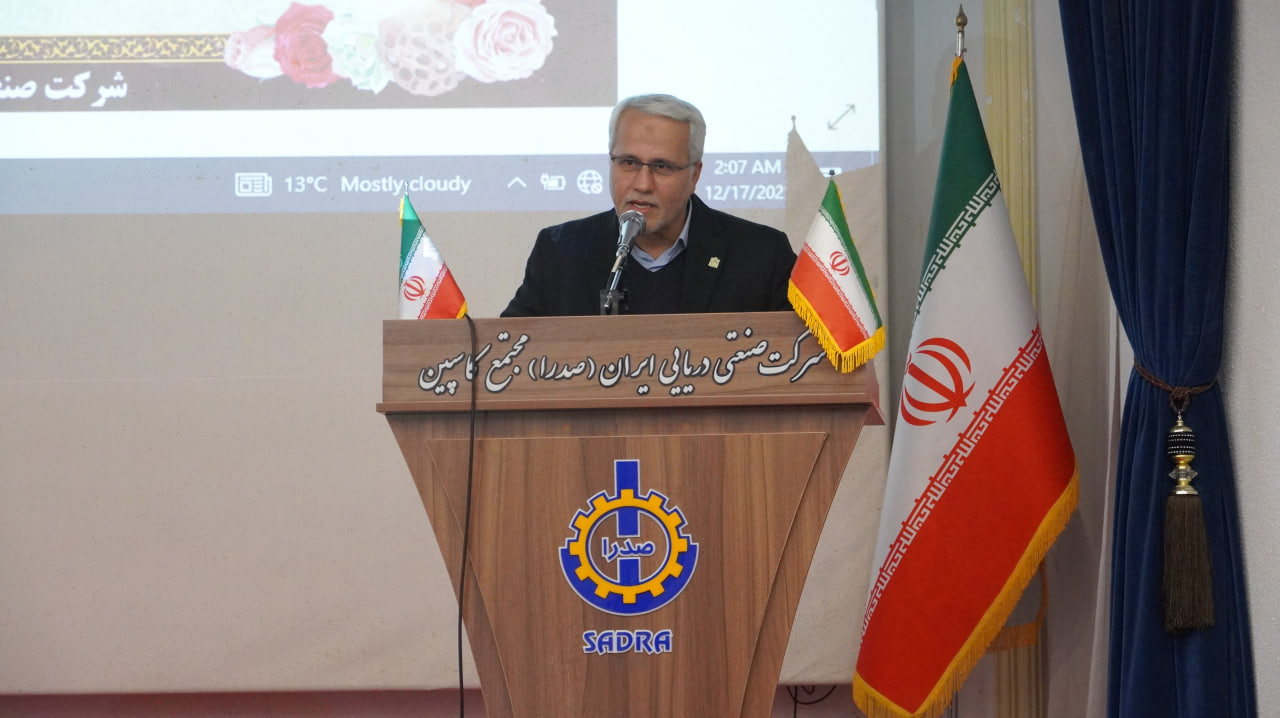
A meeting was held at the conference hall of the Iran Marine Industrial Company (SADRA) in observance of National Research and Technology Week, bringing together the company's managers, specialists, and engineers.
During the meeting, Dr. Ahmadreza Rabbani, President of univeristy, delivered a keynote address entitled "Emerging Models of University–Industry Collaboration: Experiences, Challenges, and Opportunities."
Dr. Rabbani highlighted the strategic opportunity created by the university's proximity to one of the country's leading marine industries, noting that although cooperation between MUST and SADRA has expanded in recent years, stronger and more structured mechanisms are required to deepen this partnership.
Emphasizing the importance of effective university–industry engagement, he stated that despite Iran's strong international standing in scientific publication, the conversion of research outcomes into industrial technologies, economic value, and practical solutions remains limited. He pointed to the country's relatively small share of the global shipbuilding and marine engineering market as evidence of the need to strengthen the connection between academic research and industrial innovation.
Dr. Rabbani identified several key challenges, including insufficient supportive policies, limited intellectual property frameworks, weak communication between academia and industry, and the absence of long-term collaborative strategies. Referring to successful international models such as Germany's Fraunhofer Institutes, he stressed the importance of establishing mission-oriented intermediary organizations that effectively bridge the gap between universities and industry.
As a practical initiative, he proposed the establishment of a joint research center between MUST and SADRA to undertake problem-oriented and industry-driven research projects. The proposed center would bring together university faculty members, researchers, and industry experts to address strategic challenges in marine engineering, coastal structures, shipbuilding, marine environmental technologies, and emerging engineering fields.
Dr. Rabbani also highlighted the university's research capacity, noting that MUST is home to approximately 95 faculty members, including internationally recognized scientists ranked among the top 1% and top 2% most-cited researchers worldwide, positioning the university to contribute effectively to major industrial projects. He concluded by emphasizing the opportunities created under Iran's Knowledge-Based Production Leap Law, expressing hope that structured and long-term collaboration between MUST and SADRA would promote sustainable development, innovation, and employment in the country's marine industries.
In the same meeting, Captain Amiri, Director of SADRA's Caspian Complex, welcomed the university delegation and emphasized the importance of sustained research and stronger collaboration between academia and industry. He highlighted Iran's significant maritime potential and stressed that closer cooperation among researchers, faculty members, and industrial experts is essential to advancing the nation's marine industry and narrowing the technological gap with leading countries.
At the conclusion of the event, Dr. Seyed Reza Abdollahi, faculty member of the Department of Electrical Engineering, and Dr. Arash Kamran Pirzaman, faculty member of the Department of Chemical Engineering, were honored for their outstanding scientific, research, and industrial collaborations with the Iran Marine Industrial Company (SADRA).