08:08
July 22, 2026
Yalda Celebration Held for Students at University of Science and Technology of Mazandaran
.
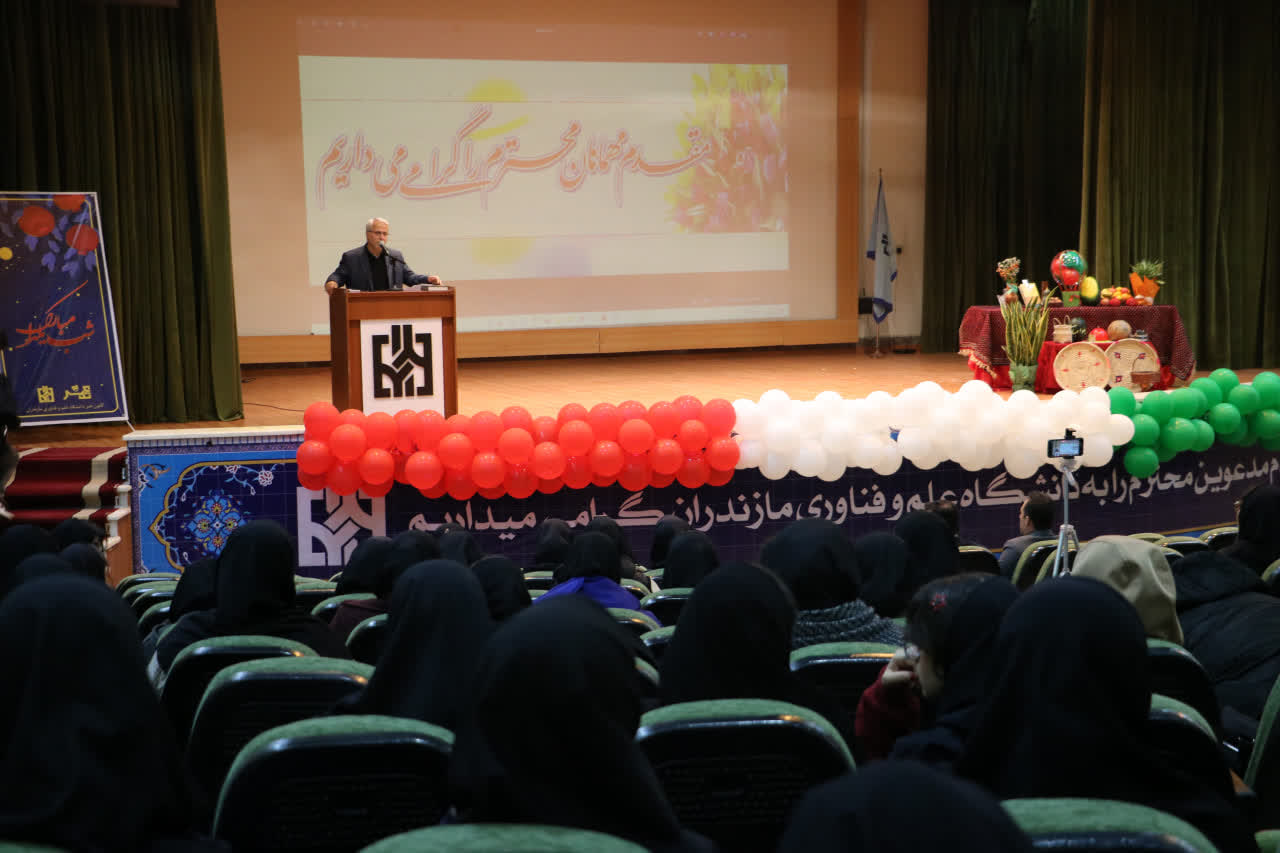
Yalda Night celebration was held for students through the joint efforts of the University's Art Society, in collaboration with student scientific associations, cultural clubs, student organizations, and the Student Basij, at the Martyr Raisi Auditorium.
In his opening remarks, Dr. Ahmadreza Rabbani, congratulated students on the occasion of Yalda Night, describing this ancient Persian tradition as a symbol of the triumph of light over darkness and perseverance in the face of challenges. He noted that, in Iranian culture, Yalda represents the journey from darkness toward the light of knowledge and truth, emphasizing that the pursuit of higher education reflects this same aspiration for enlightenment. He encouraged students to value perseverance, continuous learning, and resilience, noting that even small, consistent efforts can lead to significant achievements and long-term success.
The ceremony continued with remarks by Hojjatoleslam Heydari, Head of the Office of the Supreme Leader’s Representative at the University, who congratulated attendees on the birth anniversary of Imam Mohammad al-Baqir (PBUH) and the occasion of Yalda Night. He highlighted the cultural and spiritual significance of the celebration, describing it as an opportunity to strengthen friendship, solidarity, and shared cultural values among students from different regions of the country. He also emphasized the importance of promoting both healthy recreational activities and spiritual development within the university community.
The event also featured a keynote address by Dr. Ali Hassannejad, a distinguished researcher in the field of Mazandaran’s indigenous culture. He described Yalda as more than a traditional celebration, characterizing it as a reflection of Iran’s rich cultural heritage and scientific legacy. Referring to the ancient Iranians' understanding of astronomical phenomena and calendar systems, he emphasized that their scientific perspective on nature contributed significantly to the development of Iranian civilization and continues to inspire cultural identity today.
The celebration concluded with a variety of cultural performances, including live traditional music performed by members of the University Art Society, poetry recitation from Hafez, traditional storytelling (Naqqali), the screening of a documentary produced by the Art Society’s painting group, and interactive student competitions.